Pull three different housing reports on St. Elmo this summer and you'll get three different stories about the same tiny neighborhood. One shows the median sale price falling by double digits over the past year. Another shows the median climbing nearly ten percent. A third shows price per square foot moving in the opposite direction of the median entirely. None of these numbers are wrong. They're each measuring a market too small to behave the way a median is supposed to behave.
That distinction matters if you're setting a list price this year, because the instinct is to grab whichever figure feels most current and price against it. In St. Elmo, that instinct will steer you wrong, and understanding why gets you much closer to what a historic home here is actually worth, plus what a buyer's inspector and the city's historic zoning office are going to ask about before anyone gets to closing.
A Neighborhood Too Small To Trust A Median
St. Elmo sold roughly eight homes in a recent one-month stretch, with only five homes pending and a recently-sold dataset well under thirty properties. When a "market" is that small, one large historic Victorian selling for close to a million dollars, or one small bungalow selling for under $300,000, can swing the median tens of thousands of dollars in either direction without any real shift in what homes are worth. That's the mechanical reason Redfin's three-month trailing median for St. Elmo showed a 10.3 percent year-over-year decline as of June 2026, while a twelve-month trailing median compiled by Homes.com for the same neighborhood, as of April 2026, showed a 9 percent increase over the prior year. Both numbers are accurate readings of real transactions. Neither one tells you what your specific house, at its specific size and condition, is likely to sell for.
The more stable read sits underneath the median: price per square foot. Redfin's June 2026 data put that figure at $325, up 12.1 percent from the year before, even as the median sale price fell. That gap between a falling median and a rising per-square-foot number is the tell. It usually means the mix of homes selling changed, not that values did. Fewer large or high-end properties closed during that window, so smaller, well-kept homes carried more weight in the average, and buyers paid up for every square foot of the ones that did hit the market.
Why This Neighborhood Can't Just Build Its Way Out Of Scarcity
That scarcity isn't an accident of timing. St. Elmo's historic-zoning page describes St. Elmo as Tennessee's largest local historic district, listed on the National Register of Historic Places since 1982, and says the district has been subject to design review under the City of Chattanooga's historic zoning ordinance since 1992. New construction, additions, and demolitions in the district all require review by the nine-member Chattanooga Historic Zoning Commission before a building permit can be issued. Basic maintenance, like re-roofing, replacing siding, or swapping out storm doors, can usually be handled through staff-level review with the city's Historic Preservation Planner. Anything that changes the footprint or adds square footage goes to the full commission.
The city's Historic Planning and Design Review page says the commission meets monthly, and the Certificate of Appropriateness process gives it thirty days to approve or deny a completed application after a public hearing. A COA that's issued has to be acted on within six months, or the applicant starts over. None of that is unusual for a historic district, but it does mean St. Elmo's housing stock can't expand the way a neighborhood without design review could. You can't quietly add a second story without a formal review cycle. That constraint is a large part of why buyers are willing to pay more per square foot for what's already built. The supply of larger homes simply doesn't respond quickly to demand here.
The Paperwork That Follows The House, Not The Seller
Here's the part that catches sellers off guard: none of this historic-district machinery shows up as a line item on Tennessee's standard seller disclosure form. Tennessee's disclosure statute, Tenn. Code Ann. § 66-5-201 through 210, requires sellers to report known material defects, things like structural issues, roof problems, or plumbing and electrical conditions. It says nothing about design review overlays. A buyer's agent working in St. Elmo is still going to ask about it.
The wrinkle worth getting ahead of before you list: if a previous addition, deck, or outbuilding on your property was never run through the CHZC process, the city's fee schedule imposes a double application fee on any Certificate of Appropriateness submitted in response to a violation, under City Code Section 109.2.3. Sorting that out after a buyer's inspector or appraiser flags it mid-contract costs you negotiating leverage and calendar days you don't get back. Confirming that any past exterior work has an approved COA on file, before you ever put a sign in the yard, is one of the few moves in this process that's entirely within a seller's control.
What Inspectors Actually Find In A Century-Old House
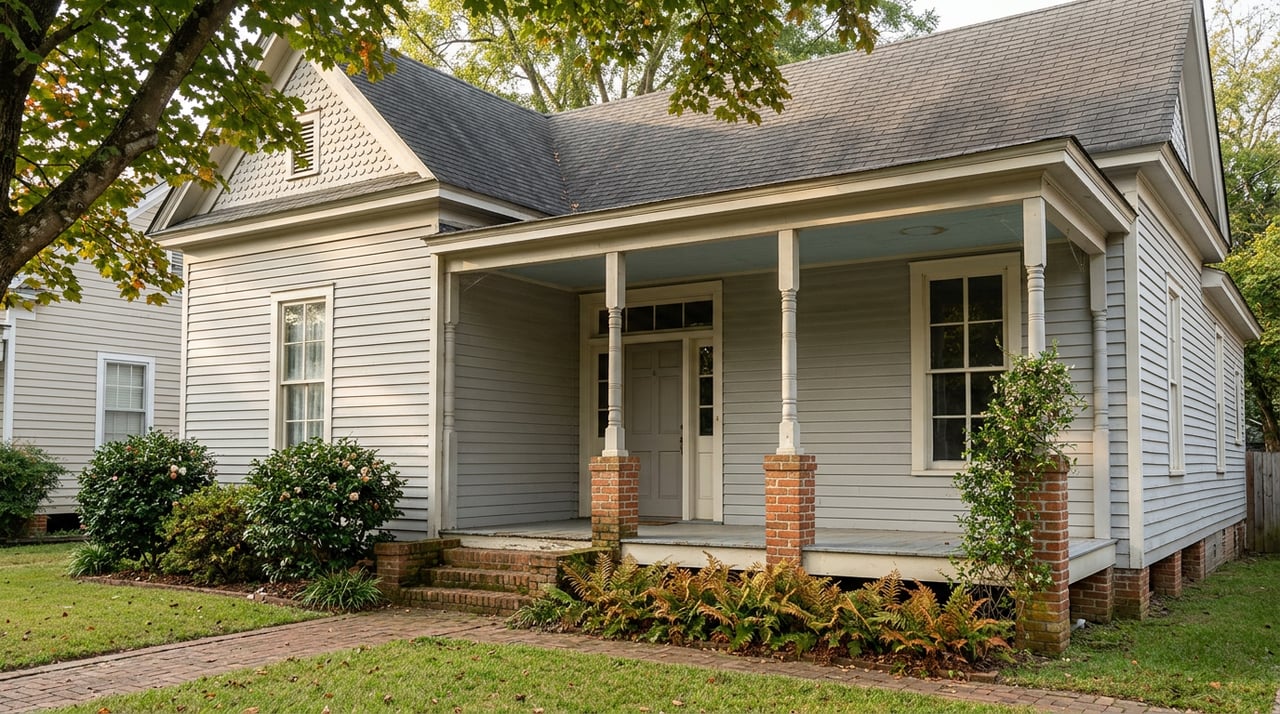
St. Elmo's housing stock dates largely to the 1880s through the early 1900s, when the neighborhood grew up along the streetcar line at the foot of Lookout Mountain. That age brings a predictable, recurring set of inspection findings:
| What Shows Up | Why It Surfaces | What Gets Ahead Of It |
|---|---|---|
| Knob-and-tube wiring or outdated panels | Some insurers require documentation or upgrades before binding a policy, which can stall a buyer's closing timeline | A licensed electrician's report before listing |
| Aging sewer laterals | Original clay or cast iron lines crack, shift, or clog over a century of use | A camera scope, which also gives you negotiating footing if it comes back clean |
| Pre-1978 lead-based paint | Federal law under the Lead-Based Paint Hazard Reduction Act of 1992 requires disclosure and gives buyers a 10-day inspection window | Disclosure paperwork and the EPA pamphlet ready at listing, not at contract |
| Unpermitted additions or alterations | No Certificate of Appropriateness on file for past exterior work | Pulling your own historic zoning file before a buyer's agent asks |
None of these items are unique to St. Elmo. What's unique is how many of them tend to show up on the same house at once, given the age and continuity of the stock here. The International Association of Certified Home Inspectors defines a material defect as "a specific issue with a system or component of a residential property" capable of meaningfully affecting value or safety. A century-old sewer lateral or an active knob-and-tube run can clear that bar. Handled ahead of time, they're a line item.
The One-Year Clock
Patterson Bray explains that Tennessee's disclosure standard runs on actual knowledge, not independent investigation. You're not required to hire an inspector before filling out the form, and you're only on the hook for what you actually know. You are required to update that disclosure before closing if anything material changes in the meantime, and buyers who later discover an undisclosed material defect have one year from the date of discovery to bring a claim under Tenn. Code Ann. § 66-5-210. That's not a reason to hide anything. It's a reason to get ahead of it in writing, because a documented pre-listing inspection or electrician's report does more to protect you than a disclosure form filled out from memory.
What This Means If You're Listing This Year
Price against price per square foot for homes of comparable era and condition, not the most recent quarterly median, which in a market this thin can swing double digits in either direction on the strength of one or two closings. Order the sewer scope and the electrical inspection before you list rather than after an offer comes in. Pull your own historic zoning file to confirm any past exterior work has an approved Certificate of Appropriateness attached to it. None of that changes what your house is worth. It changes how many days it takes a buyer to feel confident enough to close at that price, and in a neighborhood where homes have recently gone pending in under two weeks, that's the part that actually moves the outcome.
Frequently Asked Questions
Does St. Elmo's historic district status have to be disclosed to buyers? Tennessee's disclosure statute doesn't list historic zoning as a required item, since it isn't a physical defect. Buyers and their agents typically ask about it anyway during due diligence, since it affects what they can do to the property after closing.
Will a Certificate of Appropriateness slow down my sale? Not if one already exists for any past exterior work. The COA process only creates a delay when a buyer's inspection or appraisal turns up unpermitted work that needs to be resolved before the deal can move forward cleanly.
What if I want to sell as-is? An as-is sale doesn't change your obligation to disclose known material defects honestly under Tennessee law.
Selling a historic home in St. Elmo rewards the seller who treats the paperwork and the inspection the same way a buyer's agent will: as connected pieces of the same story, not separate hurdles. The Robinson Team has spent decades reading Chattanooga's neighborhoods this closely, from the foot of Lookout Mountain to the riverfront. If you're weighing a sale in St. Elmo this year, we'd welcome the chance to walk your property with you and price it against what's actually happening here, not just what the headline number says. Contact us.
This article is general information, not legal, tax or financial advice. Consult a qualified professional about your situation.